Tuesday, April 3, 2007

Forsythe Saga


“...the decline of Rome was the natural and inevitable effect of immoderate greatness. Prosperity ripened the principle of decay; the causes of destruction multiplied with the extent of conquest; and, as soon as time or accident had removed the artificial supports, the stupendous fabric yielded to the pressure of its own weight....”
Gibbon, Decline and Fall of the Roman Empire


I like to think of William Forsythe this way: he’s the choreographer who took the neoclassical baton from Balanchine, discovered its value as a social weapon, and then sprinted in a fast pair of Nikes into the 21st century yelling “revolt.” What else would a self-respecting American leftist baby boomer choreographer from Long Island do?

At the beginning of his career Forsythe danced with the Joffrey Ballet, then found his way to the Stuggart Ballet in Germany, eventually gravitating to and upending the Frankfurt Ballet, which he cast as an incendiary neoclassical company unafraid of blaring music, glaring colors and dance positions that had more to do with assembly lines and S & M chambers than palaces and opera houses.

Thanks to a willingness to take apart and remake ballet vocabulary in a way that smashed the traditional hierarchies of head, torso, legs, Forsythe has had more in common with modern dance experimenters than most ballet reformers. He’s also somebody who could moonlight as a lecturer in neoMarxist philosophy if he needed extra cash. In fact, over the years, reading his program notes has been sometimes like a slog through an especially opaque article in the journal Telos, and it has always been a relief when the dancing superceded the ideas they were meant to embody. But even when his intellectual bent leads to tendentious art, Forsythe deserves great credit for thinking philosophically and politically in an art form that, quite honestly, prefers its ideas to be decorous, or at least unobtrusive, and can punish those who get too brainy, too spiritual or too political while exalting those whose ideas are downright flimsy.

All the same, “Three Atmospheric Studies,” a political cri de coeur against the war in Iraq, was a stark reminder that the choreographer can be so driven by abstract ideas that he’s undone by them. Here he seemed to lose faith in the fact that the best dance is a physicalization of feeling-thought, not just thought, and that it has to be kinesthetically absorbed by the viewer’s body not merely her brain. Literature, decor and sound can be added to the mix, or a heady problem posed and solved. It can be brainy and even difficult. But in the finest dance--and Forsythe has authored plenty of fine dances--movement itself transmits the dna of that which needs to be communicated. In “Studies,” which premiered in the U.S. at Cal Performances in February with the new Forsythe Ballet, Forsythe got the dance’s dna confused with dna of a class on French and German social theory.

Forsythe designed “Studies” as a triptych inspired by two early Renaissance paintings,“Crucifixion” (1538) by Lucas Cranach the Younger, “Lamentation Beneath the Cross” (1503) by Lucas Cranach the Elder, and a photo of a boy being carried by soldiers following a car bombing in Iraq. The first two panels share the title “Clouds after Cranach,” referring to the ominous formations behind the crucified Christ, although clouds are equally apt for section three (called, simply, Study III) where truth is clouded by imperial propaganda and a whole lot of deafening noise.

While each of the three panels can stand on its own, put together, read left to right and then backward in time, right to left, they form a fragmented portrait of innocence in the clutches of chaos and power. Linked by a filament of a plot, “Atmospheric Studies” tells a fractured tale of a melee on a city street. That is followed by a mother’s efforts to secure the truth of events about her son, the elusiveness of truth, and an imperium’s nihilistic drive to swathe truth in good-old-boy Newspeak.

Sinuously danced by 12 unflagging dancers, Composition One occurs in a stark, almost antiseptic atmosphere, punctuated by brash overhead lights, a white floor, and a vast black backdrop. Dancer Jone San Martin steps forward. She is wearing a sleeveless pink fitted dress that looks lifted from the 60s, and speaks to the audience like a narrator out of a morality tale, announcing what has already taken place, will take place again, and perhaps will always take place: “This is Composition One, in which my son was arrested.” Her “son” is a dancer in red, and we are alert to watch him as the controlled chaos begins.

The gorgeous group starts running and falling to the sound only of of their ever-quickening breathing and dashing footfalls, and all are decked out in khakis and bright tee shirts. Sliding, careering, stopping short, wrenching their arms behind them, they fly across the stage this way and that, falling into painterly groupings of elastic, momentarily frozen tableaus, repeating the patterns in mirror image, going at it again at new angles. They run from attackers, look at the sky, point, dodge, fall and cower.

Sounds good, but there was a problem: while it looked like a virtuosic contact improv summit, it had none of the intrinsic danger and surprise of improv. That's because Forsythe’s molten movement appeared carefully choreographed and safely stylized; it also had a story to communicate (innocent people accidentally trapped by armed forces in a street) and an almost agit prop impulse in telling it. By contrast, the stream of consciousness of contact improv and its unknowable flow drives it to be deeply sensual, intuitive, as well as analytical, like jazz. Real improvisation would have injected a level of risk into this piece that was sorely missing.

Perhaps had the dancers been costumed in a babel of clothes styles--head scarves, khameez, jeans, ties--the segment might have read differently and better. But dressed as they were in ordinary Western youth street garb, no terror in sight, the scenario accumulated a disturbing recherche quality--college kids at the barricades in Paris ‘68, or a 1981 demonstration against the war in El Salvador. In an interview, Forsythe said he turned for inspiration to Cranach’s own insertion of Renaissance German elements, like clothes, into the first century Passion drama. But Cranach interpolates competing visual realities that give the composition multiple layers of meaning; Forsythe offers only one.

More critically, Forsythe failed his own challenge. The Cranach paintings communicate the quiet, timeless despair of an iconic mother, the gruesomeness of the archetypal innocent’s murder by the state, and an air of fury in nature itself. Yet Forsythe offered us no comparable experience of awe and terror. The movement in Composition One was too fluid and the impulses too controlled to capture the mystery of large forces or the true brutishness of violence. So, before long, death became little more than the negative and fairly inert space around the movers. And it was this inability to represent death in any palpable awe-inspiring way that gave this segment a disembodied quality. Ironically, it is, in large measure, the perils of disembodiment that are at the heart of his critique of our society and the war.

That made it especially interesting that, in the fiercely cerebral Composition Two, we actually got a brief taste of death’s ice and heat. Rendered as theater, with only the most minimal movement, the composition was built around two primary figures, dancer San Martin, the mother of the missing child, and Amancio Gonzalez, the official to whom she’s gone to locate her son. A third and shadowy figure, the long-limbed David Kern, hung around the periphery like an annoying academic, describing and analyzing the mechanics of the compositions--lines of sight (literalized as white rope lines converging in a single point in the background) and events from competing perspectives. Although Forsythe used him as a cool foil, he was a walking embodiment of how reductive and tedious cold-blooded analysis is.

San Martin anxiously sat in a chair in the same snug dress as before the investigation got underway. She said such phrases as “my son was arrested,” “in the street,” and the official, a careful man at a long table, searched like a writer or a philosopher for the comparable phrase in Arabic, reshaping her words or correcting her misperceptions in order to make one reality and language fit the dictates of another. He was digging for a common truth. He was also establishing control.

As information tediously accumulated, and the perspectives of the melee grew like Rashomon's tale, the officer finally informed her--and us--that the boy has not been apprehended and jailed, as the mother assumed; he’s been inadvertently killed. At this point, the heartless facticity of truth shot forth, and Forsythe drove home to the audience a small nail of shock and sorrow. San Martin soon liquified before our eyes, her body twisting inward, her words becoming disfigured as she tried madly and vainly to reassert her assumptions about Composition One. Truth seeking descended into ambiguity. Was the death an accident? Was he really dead? Within the tight confines of these terms, Forsythe played with meaning and reality like a cat pawing a mouse, and he tackled complexity quite gamely.

But as meaty as this interlude was, it added up to a brainy exercise about war as the relation of power to the control of symbolic systems, communication as “translation” and “translation” as a form of power, since those who control the means of communication are believed to be those in power. Rather than leading us into an arena beyond political theory, where the subject would be human experience in the face of war, he kept us, albeit nimbly, in the lecture hall.

Study III made matters worse. Here the lines of perspective from part two materialized into a solid, obliquely angled structure. A devasted San Martin slumped in a chair along its southern side, while to the northeast, facing us, hung photos of clouds that Kern attempted to analyze, like an intelligence officer scouring incidentals in the hope of snagging some important bit of data. He soon moved on to cold-blooded list making--where and what body parts he could find scattered around the bomb scene--a finger here, a limb there. Dancers, meanwhile, flew through a door in the building and smashed into the walls with a mix of fecklessness and symbolic heft. Was the structure the imperial intrusion of the U.S.? Jesus’ tomb? Or, more simply, the obdurate and impenetrable character of events? Noise filled the theater (sound score by Thom Willams). One dancer created cacaphonous noise by breathing into a microphone. I put tissue in my ears.

Then the work slipped into agit prop. A Texas-twanging good old boy (think George Bush), locked in the body of tiny blonde Dana Casperson, oozed good-buddy Newspeak through a voice-altering transmitter, like Laurie Anderson on a right-wing bender. “Ma’am,” s/he drawled not unkindly to San Martin, the word fanning out into three syllables, “there’s no cause for alarm.” Orwellian platitudes washed over us like magnolia-scented sludge. Pontius Pilate was probably never quite so unctuous, but the parallels to Rome in Judaea, circa 26 BCE, screamed out. (Pilate thought he was a nice guy, too.). But Forsythe ultimately minimized the enormity of the global crisis by battering us with the particular tics of this empire. He needed to go further, deeper. He didn’t, or couldn’t.

Not even the last gesture read cleanly. Forsythe’s Mary, San Martin, was reduced by events to a Petrouchka-like puppet and led downstage by Kern, who then held her head in his lap, inverting the historic depiction of the Virgin Mary, who embraces her son with exquisite anguished tenderness in Michaelangelo’s Pieta. Interestingly, “pieta” refers to a practice that derived from the Roman Empire in the years after the crucifixion, referring to the act of prostrating oneself with emotion, love and great fear before the Roman gods. Imagine an Iraqi mother--any mother, for that matter--allowing herself to be prostrated before the forces that killed her son? The State is not that powerful. Nor is it eternal. And by reducing the mother figure to a position of total collapse, Forsythe obliterates one last opportunity to show the endless capacity of the human spirit to resurrect itself in the face of even the most heinous atrocities. And in that way, our deepest truths fell prey to grimly narrow political notions in “Three Atmospheric Studies.”

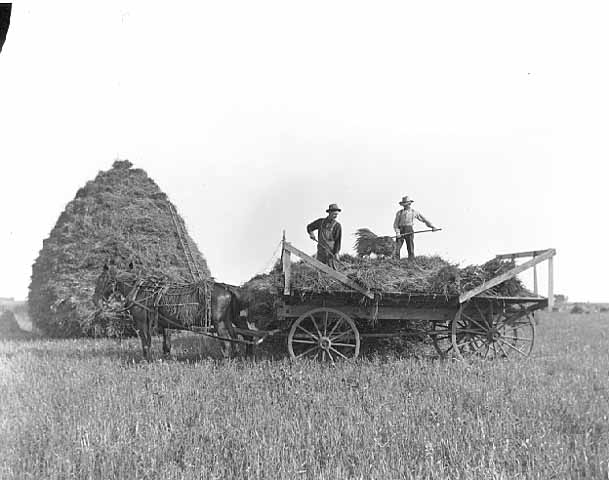
Pitching Hay


Friday March 30
ODC Theater, San Francisco
"Mountain"


Deborah Hay is a hard one to catch. Years ago, she used to roll into town, often in the summer, and have a quiet interlude at Dancers Group/Footwork. She’d offer a workshop. Give a performance. And slip away. Appropriate to a performer whose work took the A out of art and reclaimed the exalted in the ordinary, she didn’t advertise much, if at all, as though you had to be drawn to her by rumor, magnetism or chance. I’d see a flyer, contemplate the moment, then I’d miss her, and each time I felt regret. I’d seen a couple of her group pieces, but long wondered what other kind of treasure this choreographer-Zen-naturalist might conjure. Now I know.

Hay hails from Brooklyn, and she eventually crossed the bridge to Manhattan and trained with James Waring, Merce Cunningham and Mia Slavenska. She performed with the Cunningham Company in 1964 when that small band of gypsies traveled through Europe and Asia. Then, as part of Judson, she became one of the juggernauts that broke out from the Cage/Cunningham experiments and further exploded the rules of modern dance. Hay is the one most renowned for breaking down the barriers between trained and untrained performers. She migrated to Vermont, then eventually to Austin, Texas, taking an approach to dance that had a conceptual as well as Zen bent—long, deep projects culminating in performance with or without an audience. From these she turned to solo work designed in collaboration with highly trained dancers. That’s where Friday night comes in.

She named the piece “Mountain” and set it on three superb dancers from Seattle, who worked with Hay over a period of a month in Bellingham, Washington: Peggy Piacenza, Gaelen Hanson and Amelia Reeber. The mountain that inspired Hay was Mt. Rainier, which, if you’ve ever flown the Northwest corridor, rises up out of the Cascade Volcano Belt with a majesty and vehemence that is almost shocking. That specific geological formation, however, was not literally the subject or point of the piece; it was the hidden life and ever-changing nature of a mountain that grabbed her.

But the idea of a mountain was just the starting point. The dance destination, half of it choreographed by Hay, the other half crafted as three solos created by each dancer from material performed in the first half, suggested all sorts of mountain-like qualities—triangular, difficult, enigmatic, weird and powerfully constructed. Put forbidding in there, too. I realized as I watched the intrigue going on in the gallery space that it had been a long time since I’d seen dance that forced the imagination open so whimsically and boldly. It was movement that defied, again and again, easy reduction, like texts by Gertrude Stein or an early Bruce Nauman video. Yet, as far as I was aware, only two people left the theater, and even they hung in most of the way.

Leaving childhood is, in part, to forget how strange existence is. Yet, from the moment the three dancers appeared bedecked in cottony stuff—poodle-like on the ankles of one, running like a raccoon tail or Mohawk on another, like stray fluff on the head of a third—it was clear that Hay not only hasn’t forgotten but is driven to plumb that strangeness. “Mountain” began with layers of wacky Northwest echoes of pioneers and Native Americans, trailer trash and call girls. The trio, each distinct and exquisitely expressive, performed non-virtuosic movements with enormous virtuosity, moving together but intensely apart so that the space they occupied seemed to grow denser by their presence. It’s hard to say what they did--they zipped, turned, squiggled, fell. One who wore a conical cap with the cottony stuff on top, like a zany princess, said “Quit” and fell to the floor. At times they used props--small hand bells, a tambourine, rattles. But they were employed with such unexpected flourish that it was slapstick and dreamy both.

Amelia Reeber I think it was muttered words with a grizzled intensity-- “… rip, thrash, hack, thrash”--like you’d imagine a small, wizened forest creature growling, or a child inventing the utterances of a frog that had watched Lewis and Clark scouting the woods. Whatever they said, because of the dislocated aspect of their sounds, assumed gnomic import. And then, while the eye rested on a familiar fourth position placement, the mind took in something deeper--an existential position, a place of rest and beauty that seemed only accidentally related to ballet.

The solo portion upped the ante and washed over us like three beautiful arias performed in a lost language, each weird, stunning and evocative, whether it was Amelia Reeber’s with her fire backdrop and cotton-covered skateboard, Peggy Piancenza’s Brunhilda/Sacagawea, or Gaelan Hanson’s exquisite boho Indian/cowgirl, which she performed with flawless integrity and physical grace. It made me think of kids making a divine cake with nothing but a bit of dust and endless honesty.

Wednesday, March 7, 2007

PAS du tout


In high school: began and nearly ended my dancing life with jazz on pointe taught by a crazed Austrian, dancer Felicity Foote. No prior training of any kind. Next her ballet class, making matters worse. Escaped after two years to an outpost of the Hartford Ballet where Madame Laurent, formerly of the Ballet Russes, taught Russian technique. Exposed through master classes to Alvin Ailey, then Paul Taylor. On to college where Helen Priest Rogers, an early Graham dancer and co-founder of the Dance Notation Bureau, taught us the fundamentals of contraction, release and dance notation. Also with her pageboy and intelligent earnestness, exposed us to proper bluestocking bohemianism. Dropped out and studied at Manhattan School of Dance with Margaret Craske and Dorothy Hill, combing through Jill Johnston’s reivews in the Voice for deeper grasp of the avant garde. Discovered Yvonne Rainer. Listened obsessively to John Cage’s 1950’s prepared piano works, Duke Ellington and Charlie Parker. Fled West. Found Beth Jahn, formerly of the Metropolitan Ballet, studied with Marni and David Wood and encountered Cunningham technique for the first time at Margy Jenkins' studio. Spent 10 years studying and dancing with Brynar Mehl, protege of Craske and former dancer in the Cunningham Company. Began writing about dance in 1984 when I founded In Dance at the SF Bay Area Dance Coalition. Was the dance critic for the East Bay Express for 12 years, the Oakland Trib for 6, SF Weekly for 3, part of the SF Chron stable of part-time dance crits for 1.5. and have contributed to The NYT and online to danceviewtimes. Edited various sections of Dance Magazine and launched Young Dancer. Also contributed a chapter on Lucas Hoving to an anthology on Jose Limon. Look forward to writing a book on dance.

Sunday, February 25, 2007

Fight Before Beauty


I drove up 9th, crossed Market and merged left, aiming to get one of the prized spaces near Van Ness. But blocks away, all on-street parking was taken even though it was early yet--a little past 7.

I soon realized that the problem wasn’t only that it was a wet windy night and Sleeping Beauty was opening. Davies Hall was also ready for business, a reggae concert was underway at the Bill Graham center, and who knew what City Hall was weathering. The situation was grim. Even my dependable parking lot was jammed with cars doubled down its length. Still, I slowed to check out the situation and noticed that a couple were heading from their car out of the carpark in the direction of the theater. I decided to investigate and plowed in. Right away I discovered an open space next to the old ticket booth and the new money depository. It probably was too small for any but a diminuttve car like mine. I just had to figure out how to pull in and leave room to open the door.

As I was about to try and manuever into the narrow slot, wondering if I had five dollars to cram into the machine, I caught sight in the rear view mirror of a lopsided guy wearing a cap and shuffling up to the car from out of the dark. He looked shattered and needy, too much so to be working the lot, which made me hestitate to roll down my window. Yet last time I encountered such a guy he seemed like the real deal, with a change belt to prove it. What better job could such a fellow have? Then I noticed the red and white ticket stubs clutched in his hand. Okay, so he does work the lot, I thought.

I rolled down my window.

Wanna park? he asked hungrily.

How much is it?

Ten dollars.

Oh, I said. I think I’ll look for something on the strreet.

Well, I’ll make it five, he offered quickly, not unkindly. Just back up over here.

The parking attendant was black and in advanced middle age, working hard to be official, despite a lack of focus, and proving himself flexible. I liked that spirit. But what kind of spot do you get for half price?

The rain was sifting down in a soft veil. It was difficult to see as I moved in reverse, so I inched back nervously. The attendant watched with a bruised and bewildered air. I shared the confusion--cars were everywhere and there seemed to be nowhere to turn.

Suddenly a second man, trim and Indian, lurched up out of the darkness. I slammed on my brakes. He began screaming at the ticket taker and pushed him hard. The attendant shoved back and the fight was on, awkward, muscular, and vicious as real violence is. My windows were closed but I began screaming at them to stop, instantly fogging up the car. I rolled down the windows, stuck my head out, and continued screeching.

The shambling man had stolen the second man’s bounty.

The Indian man, breathless, came up to my car ranting.

I said: You shouldn’t fight. It’s not good for your--should I say karma? That sounded patronizing and corny--soul, I said. It harms you.

Don’t you see the signs everywhere? It says not to give money to anyone claiming to be an attendant. They’re all over the lot.

Can I park there? pointing at the narrow slot open.

NO, there’s no parking, he raged.

I know you need to make the money yourself--

I don’t need to make money. I own the lot. The lot is closed. I’m going to have all these people towed. He’s blocked the cars and people can’t get out and they’re calling me on my cell phone telling me I’m liable. No one is supposed to park here until 6am tomorrow when the construction crew comes. They were supposed to put up barriers so no one can get in.

You can’t tow them, I said. They’ve gone to the symphony and the ballet. They’re at a concert.

I’ve put signs everywhere.

Maybe you could--

They’re telling me I’m responsible.

Call the police. Tell them what happened.

I’m calling them right now.

Ask them to help.

Yes, I’ll call the police. I’m sorry, I’m very sorry.

Thursday, February 22, 2007

just copying

My travesty of the day, a pastiche from the early part of "Gilead" with apologies to Maryilynne Robinson, author of this quiet, spiritual tale


"Sometimes I have loved the peacefulness of an ordinary Sunday. It is like standing in newly planted garden after a warm rain. You can feel the silent and invisible life. All it needs from you is that you take care not to trample on it. For me writing has always felt like praying. You feel that you are with someone. Sifting through my thoughts and choosing my words. Trying to say what was true. In writing this, I notice the care it costs me not to use certain words more than I ought to. I am thinking about the word "just". I almost wish I could have written that the sun just shone and the tree just glistened, and the water just poured out of it and the girl just laughted--when it's used that way it does indicate a stress on the word that follows it, and also a particular pitch of the voice. People talk that way when they want to call attention to a thing existing in excess of itself, so to speak, a sort of purity or lavishness, at any rate something ordinary in kind but exceptional in degree. So it seems to me at the moment. There is something real signified by that word "just" that proper language won't acknowledge. "

Wednesday, February 21, 2007

So there's no dance in Pan's Labyrinth


Okay, so there's no dance in the stunning new film Pan's Labyrinth. But dancemakers can be inspired by its structure, especially now, when dance often seems to have lost its ability to use movement and space with deep purpose.

Pan is a terrifying and beautiful fairy tale about evil, rebellion, and redemption through fearless goodness, and it is a brave, timely film that never shrinks from vivid physical violence and disturbing, even unpalatable mystery. When the crisp fascist Captain Vidal kills two innocent villagers, for instance, he does it with a sensual precision, and that precision seems to emanate from an absolute and efficient cruelty almost too horrifying to contemplate. He is the inhuman in human form, the earthly equivalent of the denatured monster we meet dwelling underground and woken by young Ofelia, the Captain's stepdaughter.

Ofelia is del Toro’s heroine, and like Psyche she is sent on a mythic mission with several seemingly impossible challenges to meet. One of them is to draw a door anywhere in her room with magic chalk and enter the underworld beyond. She is told to reject all food and drink, no matter what, and to use a magical key to uncover a knife before the sands of a minute clock have all fallen. But Ofelia is human, and she eats enchanted grapes at the monster's table. As in all fairy tales, terrible events are suddenly unleashed: the monster comes to life.

This is not your run-of-the-mill bad guy. This is a vilely embryonic but ancient creature who is a physical blank. He has no eyes in his head. His eyeballs in fact sit on a dish on the table until he is conscious and can slip them into slits in his hands. He then lurches up from his chair to hunt down his young prey. He holds his palms against his head; he waves them in the air. The monster is a seeing brain stem, a cognizant physical force driven to track and consume the naive, the weak, the unsuspecting. The Captain is just as elemental, precisely as evil, and it makes the mind and soul squirm to be reminded that such people are in our midst.

As a storyteller and moralist del Toro's power resides in the fact that he makes us feel those forces through a journey to multiple physical and metaphysical levels. He moves us from place to place, takes us down into assorted underworlds, up into the confinement of Ofelia's pregnant mother, out into the woods, deep into a labyrinth. In each place different forces, often competing, are at work.

The camera catches the Captain in his enormous quarters shaving, for example. First we circle him. Then the camera sneaks up; suddenly the image stutters, lurches. Next the camera apparates to the other end of the room, eye still on the man. The effect is vertiginous. The Captain himself seems to have power over the camera while being oblivious to it, and it is one of the ways we discover that he is the devil’s double.

While choreographers can’t make audience members omniscient, they can manipulate the meaning of space. Librettist Theopile Gautier and choreographer Jean Coralli made Giselle’s village clearing in Act I a forest glade where dangerous enchantments take place in Act II. More recently, Angelin Preljocaj delineated the powerful and the powerless in his Romeo and Juliet by the kinds of steps they performed and where they performed them: the oppressive Capulets danced like Cossack soldiers across the stage while the mischievous Montague boys resembled raucous street urchins from West Side Story, darting in and out of the dominant space. Tere O'Connor establishes the archetypical amid the banal in Lawn by appearing as a hag on film, like Madge from La Sylphide, or Nature herself, darting behind trees, running out on to a large lawn, capturing lost plastic bags and napkins, while dancers on stage move with jarring dreaminess. The upshot is that each world penetrates and reflects the other, disturbing us as dreams disturb us.

Such layering isn’t the exclusive domain of loosely narrative dance, either. Merce Cunningham establishes interpenetrating realities in Ocean by arraying the dance in concentric circles. There’s the circle the dancers move in below the ticket holders, the circle (or quasi circle in Berkeley’s case) the audience inhabits, and then the upper loop where the musician encircle the entire action. Symbolism is rife here, alluding to far more than brainy movement by preternaturally adept dancers. Each stratum establishes a different realm of time and space. The dancers are at the center of a well of time, revealing our mythic beginnings with African kick steps and leading us on a journey that is hypermodern and yet ancient. The musicians allude to a sphere beyond time. We, the audience, are sandwiched between the two, which, in a nutshell, describes the plight of being human.

Last month Ellis Wood Dance performed Hurricane Flora: Inferno at the Cowell Theater. While she tapped the primal feminine with stunning abandon, Wood’s dance phrases were often too lax and unpatterned to fully harness her volatility and make it legible on multiple levels, especially competing with Ed Rawlings’ elegant video of sky and leaves. What if Woods had alluded to the actual structure of the hurricane Flora of 1963, which had depressions, convergences, a center, cyclonic loops and a calm eye? Wood might have gained eloquence had she constricted the women in space the way she constricts herself to a single spot in Stella, then sent them looping fiercely. Such limitation paradoxically leads to boundary defying resonance. Jose Limon, for instance, is able to communicate Judas’ impending betrayal in The Traitor by taut expressive opposition, his movements circling in, coiling, snapping. In Viktor Pina Bausch creates a host of associations by tightly constraining the actions of a female chorus. These women transform Odette’s iconic preening into the despondent and obsessive tics of apron-clad drudges, and the effect is both tragic and hilarious, transcending any single historical moment, or any particular group of women.

Because he shows the mythic dimension of fascism and its earthly cost, del Toro is able to invent a man who is more than a mere man, someone who can’t be reduced to a political struggle, an Oedipal wound, or a characterological flaw, even though all those things obtain. The filmmaker settles for nothing so complacent or cozy. Those who do--the mayor and priest and their consorts who sit at Vidal’s table and agree with every utterance he makes--are complicit in the Captain’s crimes.

The question for dancemakers is how to make the private resonate beyond our narrow personal boundaries? How to include the individual inferno in the public storm and vice versa, and do it through distilled action? And is that storm healthy or about to kill us?

For del Toro the answer is unequivocal--if Ofelia doesn’t take up her mythic tasks, which again and again require her to place herself in spaces so constraining that they are almost suffocating, an ancient fig tree--the tale’s tree of paradise-- will die. Sure, the future of the world doesn’t depend on choreographers adeptly expressing our contemporary plight. And we already see that if dance can’t do it, other arts (with Latin film in the lead) will take up the challenge. But because the body is the centerpiece of human existence, dance has a direct link to the primitive as well as the sublime. It may be time to look at The Green Table again and to take a page from Graham’s Into the Maze.

Monday, February 19, 2007

Happy Birthday Paul


The Bay Area's erudite dance critic and wordsmith turned 60 today, and as evening fell he was feted in his cottage by old Rhodes scholar friends, university professors, neighbors, and fellow travelers from the dance world. His Berkeley digs have the feel of a cabin in the Humboldt County redwoods crossed with a bookish, slightly British bohemianism. Throw a little of the deep South in for good measure (Paul begins to drawl when he's self-conscious). But then that's Paul's trajectory: California, England, Mississippi.

Paul, we are waiting for your book.

If you haven't had occasion to read him, go to danceviewtimes where he's a frequent contributor, or San Francisco Magazine, where he's the resident dance writer. His essays on the SF Ballet are a paragon of the rich incisiveness that ballet writing can yet rarely does achieve.

Sunday, February 18, 2007

Lift a rock, watch the sky


I don't remember a time when dance didn't seize me with a wild happiness. May Day circling around a tall pole in a Manhattan playground. Doing the Hokey Pokey because that was what it was all about. Hoola Hooping to music. Ballroom dancing in a striped dress and white gloves. Riding my bike was a form of dance and so was leaping off swings with aesthetic intent.

Codified dance is only part of the story.

And thank god for television. At three I was mesmerized by Shirley Temple. She tapped down stairs that gleamed like piano keys, working her little legs hard with her partner, Bill "Bo Jangles" Robinson, performing beside her with a silken, deeply human elegance. Later, American Bandstand made lots of us hunger to be old enough to do the Mashed Potato or perfect the Boogaloo, and when the time came we honed the latest steps until they shined. Once in awhile I switched on WPIX's televised gospel singing Sunday morning to see how the Harlem choir moved as it sang--or were they singing as they moved? I was never sure. And occasionally PBS programmed modern dance, before I even knew what modern dance was. One morning it showed the seismic slitherings of Twyla Tharp's new company. The dancers let their feet wander away from their liquid torsos and then return, the whole thing resembling jazz but not jazz, performed introspectively but together, and I didn't exactly understand it, but it intuitively and irrevocably enlarged my grasp of dance.

I thought that cheerleading was a form of dance, and that marching bands that performed beautifully synchronized strutting to bright, brassy sound could be dance. Little girls teaching each other the latest steps on a North Oakland front porch was thrilling dance and so was my brother's hipswiveling moves in front of a mirror. His insecure vanity was comical but his style was just right--understated and cooly sexy.

The Catholic Church of my childhood frowned on dancing. But like sin and goodness, movement was everywhere, sensually beautiful and more heavenly than a funeral mass. Besides, how do you censure the flight of starlings and the kickstep of leaves in the wind, the telepathic on-a-dime turns by an entire herd of elk and the concerted movements of ants in a kitchen? Dance is part of our dna, with our strands of genetic information entwined in a fundamental promenade. Lift a rock and the insects dance. Watch the sky, and the stars dance too.

Writingdance.com is dedicated to the art in that vein.