Wednesday, April 30, 2008

Harry made the NYT, Newsday, the Daily News, the Voice etc., and has the men in blue turning red


http://youtube.com/watch?v=xgrqThagkrE&feature=PlayList&p=28E691012EDFBE46&index=8http://

www.nytimes.com/2008/04/30/nyregion/30about.html?pagewanted=print

http://www.newsday.com/news/local/newyork/ny-nymari0430,0,1720357,print.story

http://www.nydailynews.com/news/ny_crime/2008/04/29/2008-04-29_racial_slant_in_pot_busts.html

http://www.villagevoice.com/news/0818,kelly-for-mayor-a-voters-guide,427148,4.html

eating sushi on the eve of May Day a Free Tibet demonstration marched by


Journalism as Literature:
A Lost Art
by Christopher Hitchens


The generic British word for journalist — now unofficially adopted by all English-speaking foreign correspondents — is “hack.” This represents an effort to draw the sting from an insult by annexing it to oneself. Other self-descriptions, such as “reporter” or “correspondent,” represent an attempt to professionalize what began as a craft or trade. One hack of my acquaintance used the word “writer” as his official occupation on his passport because, as he said, it could by the stroke of a pen be changed to “waiter” if the officials at the frontier post looked menacing or uncooperative.

Yet to be considered a “writer” is the highest aspiration of the hack. It is something that can only be said of you by others, not something you can lay claim to yourself. In the course of this spring at the school of journalism, I have been attempting to highlight those moments in American history when mere journalism rose to the level of literature. I thought this might be good for morale.

“Unacknowledged legislators” was Shelley’s term for those poets who raised the moral and political temperature. The United States Constitution does not mandate an opposition party, but its First Amendment does grant unprecedented liberty to the press. And very often, in periods of crisis, it has fallen to the wielders of the pen to fill the void or to set the example. By what I consider to be a nice coincidence, the most luminous moments of “journalism as literature” have also been the moments of courage and dissent.

Indeed, the American idea is the product of a clash between rival journalists and pamphleteers, who in pre-revolutionary days conducted a vigorous argument about the first draft of the United States. In my J-school course, therefore, we began with the work of Thomas Paine and Benjamin Rush, and continued with the tussle over the Federalist Papers as conducted in, among other places, Alexander Hamilton’s New York Post.

The crisis over slavery, another institution which enjoyed “bipartisan” support, was largely precipitated by the work of a few outstanding journalists and editors, principal among them William Lloyd Garrison, Frederick Douglass and — first martyr of the American press — Elijah Lovejoy. Of special interest is the way in which the anti-slavery movement cross-fertilized, especially through Douglass’ personality, the movement for the enfranchisement of women. This, too, was largely conducted through journals like The Revolution.

Upton Sinclair’s novel The Jungle (written for serialization in a paper called The Appeal to Reason), Mark Twain’s almost Swiftian writings on the Spanish-American war, the lonely but beautiful writing of Randolph Bourne during the “Great War,” and the huge one-man journalistic and literary efflorescence of H.L. Mencken in the 1920s and ’30s — these all help to establish a certain tradition.

There remains the question which I have been, in my own mind, slightly postponing. What has become of this great tradition today?

Saturday, April 26, 2008

come what MAY

TERPSICHORE
the muse of dance, and Thalia (comedy) and Melpomene (tragedy) , the muses of drama, are going to have to duke it out this month, because I'm claiming Canadian writing/directing wonder Robert Lepage as one of dance's own. To my delight, Lepage, after a three-year absence, is bringing his Andersen Project to Cal Performances late in May, to be performed by Yves Jacques. Lepage's fans have missed him.


Dance, as you may know, is the real mother of Western drama, an art form that evolved in ancient Greece from Dionysian ritual performed in remote groves by raucous women who chanted, danced, worshiped, sacrificed animals and are said to have engaged in a fair amount of screeching on behalf of the god of wine and the underworld.

The goings-on apparently gave men down in the valleys a bit of a fright, and before long, the Athenians were building amphitheaters and employing participants in far more stage-managed rituals, ones that excluded women altogether. That tamed practice is the precursor to our sitcoms and daily soap operas, as well as our Broadway plays, while Jerry Springer may be the one putting us back in touch with the bestial aspects of the arts' roots.

Dance and drama are intertwined in other ways. Both depend on the body as their instrument —— the primary language for each is the physical expressiveness of the human form.

This is Lepage's metier. But the guy from up north likes to create disruption in the landscape. Lepage breaks down boundaries and injects surprises, while keeping the body at the center of his story. Perhaps that is why he calls his production company Ex Machina, from drama's "deus ex machina," meaning "god from a machine" (referring to the ancient method of using a crane to deposit actors on the Greek stage).

Although based on two tales by Hans Christian Andersen, the Andersen Project is a postmodern quest and a pensee about a solitary man confronting identity, art and history.

As usual, Lepage's visual mastery is paramount, the stage a dreamscape of projections, of movement and static figuration, and of layered light on the solitary body that at times creates a loneliness so beautiful it no longer counts as mere loneliness. And if that isn't enough, the landscape is pierced by hilarious monologues that dance their own dance.


Details: Robert Lepage's Andersen Project, 8 p.m. May 28-30, 3 p.m. June 1, Cal Performances, Zellerbach Hall, Bancroft Way at Telegraph Avenue, Berkeley, $62, 510-642-9988, www.calperfs.berkeley.edu.

THE BODY POLITIC: This month, ODC Theater in San Francisco continues the series called "For the Record: Dancers Debate the Body Politic" in its temporary digs at Theater Artaud. May 1-3 spotlights veteran choreographer and the unsung Bacchante of Bay Area experimentation, Sara Shelton Mann, who founded Contraband in the mid-'80s, a dance troupe that often seemed to double as a social movement.


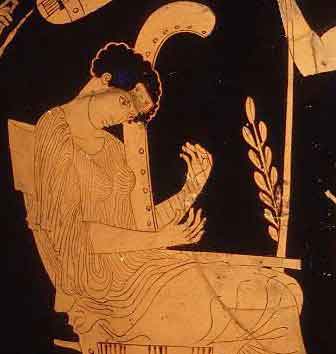
jim bostick, the reclining bacchante

This month, she completes her three-year work-in-the-making, "Inspirare," reprising part one, "Telios Telios," from 2006, part two, "Inspirare" from 2007, and debuting part three, "RedGoldSky." Shelton Mann incorporates the "total theater" principles of her mentor Alwin Nikolai, the long lines of Cunningham dance style, with ritual elements and collage (for a sneak peek, go to www.youtube.com/watch?v=Php7hayunLU).

Mann is followed at Artaud May 8-10 by ex-Bay Area resident Miguel Gutierrez, who is now a fixture in the Brooklyn, N.Y., dance scene. He is a dancer who has invited viewers into his living room to watch him with an intimacy rarely possible in traditional spaces.

For this run, Guttieriez presents "Seduction of Order," a work that contends with the beauty and the politics of the body and is set up as a diptych that is said to address both the act of performance as well as the experience of the performance. (It sounds a little like looking into dressing room mirrors that reflect each other without end.)
Details: Sara Shelton Mann, 8 p.m. May 1-3; Miguel Gutierrez, "Seduction of Order," 8 p.m. May 8-10, Project Artaud Theater, 450 Florida St., S.F., $20 advance, $25 at the door. ODC Box Office: 415-863-9834 (2-5 p.m. Wednesdays-Saturdays). ODC Theater, 3153 17th St., S.F.

THARP PREMIERE: For pure dance, dance without a bow to ritual, to words, to allusions to grand drama, Company C Contemporary Ballet's world premiere of a Twyla Tharp dance, "Armenia," at the Dean Lesher this month is a paean to nothing but the genius of a body in motion. Tharp's 14-minute elegantly floor-skimming work has all the carefree ease of signature Tharp with Rubik's Cube intricacy hiding inside. Director Charles Anderson includes his own "Echoes of Innocence," the late Michael Smuin's "Starshadows" and former Taylor dancer David Grenke's "Vespers" on the bill.
Details: Company C, 8 p.m. May 23 and 24, Lesher Center for the Arts, Civic Drive at Locust Street, Walnut Creek. $40 general, $25 students/seniors, 925-943-7469, www.companycballet.org.

THE "IZZIES": And finally, a fine way to usher in May with Terpsichore on your arm is to sample the Isadora Duncan Awards, where more than 40 dancers, dancemakers, technicians, composers, dance companies and ensembles have been nominated for an Izzie in recognition of their outstanding achievement during 2007. It is the one time a year when the dance community turns out in all its wacky splendor to celebrate itself on the eve of National Dance Week, the week when free dance classes are held in studios, universities and colleges all around the Bay.

It's free and open to the public, reception at 6 p.m., awards ceremony at 7 p.m. Yerba Buena Center for the Arts Forum, 701 Mission St., San Francisco, 415-920-9181.

Ann Murphy's In Step appears monthly in Weekend Preview. Reach her at writingdance@yahoo.com.

Monday, April 14, 2008

hope. spring. eternal.


The Oakland Ballet as the Comeback Kid drew a big crowd full of tulle-bedecked children, jeans-wearing teens and casually festive families Saturday to see director Ronn Guidi's 1996 production of "The Secret Garden" at the Paramount Theatre in downtown Oakland.

Even some of the seats at the back of the cavernous movie palace were occupied by people other than ushers, and for the first time in decades, Oakland Ballet seemed to have corralled a broad audience.

What was particularly exciting was that some of the ticket holders seemed never to have seen a live theatrical show before, like the teenage boys who laughed at what, to them, sounded like a real-time mishap backstage (the taped sound of a tree falling).

Moments later they realized their mistake when the woman who disappeared into the wings was next seen in her stage husband's arms.

Exposing people to the excitement of live performance can make restagings such as "The Secret Garden" wholly worthwhile, especially when live music is there to bolster the action, as the Oakland East Bay Symphony under Michael Morgan was. Although their playing was uneven, they supported the story with the sweeping, plaintive music of Edward Elgar and it transmitted the physicality of dance as canned music rarely can.

But it would inspire people a whole lot more if they could understand the narrative action without having to read the story. Even people who knew the tale had trouble placing the woman in the sari (danced by Michelle Brown) who tended and seemed to spiritually shelter a lonely young girl named Mary. Was the sari-clad woman real, someone wondered, or a ghost?

And the brevity with which, in the dance, the story's omnipresent housekeeper, Mrs. Medlock, appears (danced with hilarious imperiousness by Oakland Ballet alum Joy Gim) also brought confusion. A synopsis would have offered some help. In its place the program listed the titles of the more than 30 scenes and read like a Morse code — "Morning, a week later" or "Mary, in India and her parents' deaths."

During intermission, one mom marched up the aisle telling her daughter that she hoped by Act II to have figured out the story. But even a synopsis wouldn't have solved all problems. Wave upon wave of fast-moving scenes read across the footlights as endless backstory. Not only did the narrative frenzy get exhausting, but the point to it all seemed a long way away. It was.


Based on Frances Hodgson Burnett's 1911 classic "The Secret Garden," the ballet revolves around the orphaned and feral Mary and, in echo, her crippled cousin Colin, both damaged by loss and adult neglect. Mirroring them are a few even sourer adults like Colin's father Archibald Craven and Mrs. Medlock. A maid, Martha, and a gardener, Ben Weatherstaff, offset the neglect with attention and care.

The garden surrounding Craven's manor that Weatherstaff tends holds another, secret garden where Colin's mother's accident occurred. Both physically and metaphorically, the garden is the heart of the story, linking love and persistent care to rebirth.

Much about Guidi's "Secret Garden" was valiant 12 years ago and remains so, embodying some of his strongest talents for mise-en-scene, for precise, commedia-style characterizations and for heartwarming story.

Seventeen-year-old Claire Lewis portrayed a captivating Mary and brought her character to devilish life with perfectly pitched gesture, strong dancing and narrative flourish. Longtime company member Michael Lowe as the rheumy Weatherstaff managed to be gently doddering and smoothly funny.

Sensuous Jenna McClintock as the wife Lilias and crisply distant Joral Schmalle as the husband Archibald Craven each brought mature depth to their roles, although Guidi's choreography never rose above the ordinary.

Guidi's greatest strength has always been as a dramatic master of the small detail. Here, as in his "Romeo and Juliet," he uses his acting knowledge to carve out characters we care about. What is missing amid Rod Steger's still-captivating scenic decor and Ariel's warm costumes is a feel for condensed meanings, dance that is sculpted as well as flowing through time.

"The Secret Garden," for all its narrative accuracy, sentimental care, strong performances and kid-friendly flourishes, never moves us. Minus that, I expect that those teenage boys won't be back in the theater anytime soon.


reprinted with permission of the Contra Costa Times

Tuesday, March 11, 2008

east of eden


On the heels of last week’s celebration of the great populist, Jerome Robbins, San Francisco Ballet continued its romance with romance Friday. Four works were on the boards for program 5, three of them paens to Robbins-style lyricism, and one about as romantic as a day in divorce court.

Christopher Wheeldon’s 2002 Carousel (A Dance), which opened the program, is beloved in certain sectors for replicating the dreamy dance pairings that Broadway made famous. Taking his cues from the 1947 Rodgers and Hammerstein musical Carousel, he stages the budding love between a carnival worker and an unknowing girl. It’s romance on the other side of the tracks, where, in the original, tragedy comes calling.

Jerome Robbins is dance’s lyric poet, and his archetypes—sailor, dreamer, gang member, dancer—transform dance into popular folklore. Although talented, Wheeldon is not in the same class –he can’t pull off the kind of musically stunning, characteriologically perfect distillations that make Robbins Robbins. Overstating characters, packing too many steps into a phrase to make a point, he gives us top-notch sentimentality and likable prettiness rather than essences.

So while Sarah Van Patten as the girl and a too-nice Pierre-Francois Vilanoba as the carney danced lusciously and proved they were in full command of their material, their yearning was fraught with clichés of innocence, breathlessness and surprise. Through no fault of their own, rather than dangerously mismatched lovers they seemed like middle class teens on a blind date at a local amusement park.

Wheeldon fared better in his evening’s second work, the Pas de deux from After the Rain. If the Richard Rogers score was a shower of melody and waltzing, Arvo Part’s radically slow, minimalist piano/violin duet from Spiegel im Spiegel (Mirror in a Mirror) was a call to sustained restraint, and Wheeldon met it.

An angularly thin and iron strong Yuan Yuan Tan in a sleeveless leotard and bare legs, and Damian Smith in bare chest and p.j. pants engaged in unspooling movement that defined relationship in often awkward, interesting patterns of vulnerability and surprise. This was a pair of lovers who explored rather than wallpapered love.

Helgi Tomasson’s On A Theme of Paganini, which followed, gave love numerous, beautiful shadings that veered from the individual to the group and back again. The sparkling quintet of Maria Kochetkova, Vanessa Zahorian, Joan Boada, Davit Karapetyan and Pascal Molat married the zest of Robbins to the purity of Balanchine. Rachmaninov’s lush score was pulled from the brink of excess by Tomasson’s Calvinist cool, while the whole was delicately designed by Martin Pakledinaz in Apollonian shades of white, twilight grey, Prussian blue and lilac.

Then, like a mutant gene, Eden/Eden (2005) crashed the love fest. What a welcome jolt.


Wayne McGregor’s dystopic ballet, which premiered at SFB last year, posits two edens—past and the future--and an anti-heroine named Dolly, the sheep cloned in Scotland in 1996. The resulting relentless, multisensory work is set to Steve Reich’s onrushing music for Three Tales plus video artist Beryl Korot’s visuals.

De-gendered dancers begin decked out in beige unitards and skullcaps, performing extreme undulations, matings and recombinations at reckless speeds in a dance language that is Cunningham squirmingly recombined. Overlaid with harsh and anguished discourse about cloning, the body, and the nature of life, it is one of the most provocative ballets in memory—frightening as well as riveting, beautiful as well as hideous. While it isn’t exactly about romance, it is, indeed, about life and our love of it.
all photos copyright of Erik Tomasson

flaming the fans


all photos copyright Erik Tomasson

Jerome Robbins' fans cheered San Francisco Ballet when the curtain came down on the company premiere of "West Side Story Suite," and leading the pack was Rita Moreno, the slight, tough-minded Anita of the 1961 film "West Side Story," who was the first to leap out of her seat.

The lineup on Thursday consisted of three eminently fluent and deeply pleasing Robbins dances, each fueled by a sexy, casual-looking elegance worn either by upper-crust characters or, more often, by likable proletarians. All of the works sailed into and through the music like well-made boats.


All also knew how to wear their angst near the funny bone. Even in a work as traditional-seeming as his 1970 "In The Night," the choreographer insisted on making us laugh. Here Robbins presented three versions of Chopin-girded love--young, settled and falling apart--and it was the deteriorating kind that flared bigger, louder and wittier.

Lorena Fejoo and Damian Smith erupted repeatedly from their silken reverie to balletically feud, which was as irresistible as it was apt. In Robbins' world, the stunning idyll performed by Yuan Yuan Tan and Ruben Martin and the beautiful accommodations elegantly exacted by Elana Altman and Tiit Helimets are the foil to Fejoo and Smith's messy, comic unraveling.


The night got off to an old-fashioned start with Robbins' very first ballet, "Fancy Free" (1944). Rendered with slapstick sweetness by Pascal Molat, shapeshifting humor by Davit Karapetyan and boyish physicality by Garrett Anderson, it is a tale of three World War II sailors on shore leave soft-shoe-ing, clowning and competing for drinks and love. When two "Passers-by" materialize, the girlish Vanessa Zahorian and a sultry Erin McNulty, trouble of the charming kind ensues.

This was tender small potatoes, giving the audience a taste of the big stuff to come in "West Side Story Suite," which is a mini "Romeo and Juliet." Packed cleverly into 35 minutes, "Suite" required half a dozen forms of dance, five solo singers (one of them from the company), a street rumble and gangs breaking into song. In place of Officer Krupke, a police whistle repeatedly trilled.

Straddling Broadway theater and abstract ballet is a demanding stretch, yet the corps tenaciously rose to the challenge, capturing the competing New York street punk styles-- one white (note: needs more grit and sex), one Puerto Rican. They also inhabited the broad characters and sang tunefully enough after relentless dancing. Pierre-Francois Vilanoba was a hunk of a Bernardo and Shannon Roberts was the pistol-hot girlfriend Anita. Garrett Anderson's Tony was aptly sweet and loyal.

Saturday, March 8, 2008

faith, hope and ailey


With the announcement last week that Judith Jamison will retire as head of the Alvin Ailey American Dance Theater in 2011, dancegoers are forced to take stock of the company's extraordinary 20-year run under Jamison's care. Not only did the fiercesome, elegant 5-foot-10 dancer reassemble a troupe that had fallen into disarray, but she propelled the company to the very top of the field. Wednesday night's dancing was testament to her success.

It was the first night of the company's stop at Cal Performances in Berkeley, a program of four works that ranged from the sassy to the sculptural to the reverent. But the dances generally took second place to the dancers, who commanded the stage with more professionalism and well-chiseled character than virtually any ballet company on the map and any handful of top modern dance troupes combined.

That is Jamison's legacy, hands down.

In the Ailey company, there are no cookie-cutter dancers, no android corps members. It is a troupe of movers in astonishing command of their instruments (that means head, heart, and body), and like both chamber players and jazz musicians, each of them can step out to solo, then fuse back with the whole. They can also dance just about anything handed to them, from ballet leg beats to the Funky Chicken.

The tall and exquisitely protean Clifton Brown is one of the company's current virtuosos. He opened Wednesday with the intensely balletic "Firebird" (1970) as conceived by the once-avant-garde French choreographer Maurice Bejart, who infused ballet with greater cinematic sweep and populist impulse than it had had since the Ballets Russes.


Brown is a promethean Firebird, a male principal unabashed by fluttering softness, and he uses his long, strong but soft limbs to wing through space and make it shimmer. He is surrounded by a band of soldiers in the kind of pastel camouflage American troops now wear (in the 1970s, the soldiers wore Mao caps), and they embrace him with unison work that is broken, occasionally, by beautiful duets or solos. Battle leads to a broken-winged Firebird and the eventual emergence of his double, the Phoenix, danced by Jamar Roberts.

The original "Firebird," choreographed by Michel Fokine in 1910 for the Ballets Russes, extrapolated its story about the magical bird from the long-toothed Russian fairy tale. Bejart, in turn, took only the symbolic phoenixlike creature at the center of battle to create a work of rebellion and rebirth.

A company spokeswoman said that Ailey has been trying to acquire a Bejart ballet for some time (Jamison herself danced with Bejart's company). "Firebird," with its allusions to nationalist struggles of the 1960s and social renewal, is a timely choice this year. Jim Crow laws segregating whites and blacks were still on the books in the South when Ailey created a troupe in 1958 with artistic and racial diversity as its guiding principles. Much has changed since, while much remains to change.

Jim Crow was alive and well, too, when Ray Charles sang "Lonely Avenue" and sang and wrote "What'd I Say," the latter appropriating gospel music at honky-tonk speeds to celebrate physical pleasures. This is the music that launches "The Groove to Nobody's Business" (2007) by Camille A. Brown in its West Coast premiere. It's a delightful slice of New York life above ground and in the subway. Though it loses steam by the time the ensemble is riding a subway (both music by Brandon McCune and Brown's movement are too tame), it offers us a wacky array of bit players and their butt-shaking fulminations danced hilariously by Matthew Rushing and company.


The rest of the program "" Elsa Monte's sinuous "Treading" (1979), set to Steve Reich's "Music for 18 Musicians," and the venerable "Revelations," set to gospel and folk songs "" upended conventions when they were crafted. The Ailey company doesn't let us forget the power of those landmarks, and with a vision and fortitude that puts faith in art, keeps giving them new life and meaning with joyful and peerless dancing.

reprinted with permission

Friday, March 7, 2008

breathing is the same for everyone


"Peace joins us. Breathing is the same for everyone."
Hearan Chung

I first met Hearan Chung six years ago. The dancer, recently arrived from South Korea, was living with her two children in an apartment in Millbrae, and I drove down to interview her in person. It was late spring, and I was writing an article about the upcoming Ethnic Dance Festival where she was to appear. Girded with only a smattering of knowledge about Korean dance inhaled quickly from a few sources, I plied her with basic questions; she talked with depth. At one point she graciously offered to demonstrate some of the dance’s fundamentals—the arc of movement, the trajectory of the breath, the courtly 4/4 meter. It didn’t matter that she was in jeans and tee shirt or that her floor space was limited. I could see why this modest woman was designated “a holder of important invisible properties.” She made the invisible visible.

Some weeks later the movement fragments she showed me appeared in Salpuri, an exacting shaman dance that Chung performed in the Festival. It was a work full of heroic restraint, channeling deep, emotional tides and complex thought about time and reality. Movements seemed to arise from far away then return to their source. A wrist, a knee, a step—each gesture was performed with chiseled deliberation and internal sweep. I saw her again in the Festival last year and was astonished all over again. Chung is a master.

Late in February on one of those nights the rain came down so hard it was like being inside the car wash during the rinse cycle, I joined a packed crowd gathered at San Mateo Community College to revisit Chung’s dance in a program entitled “Eternal Korea (Dance and the spirit of death)”. Accompanying the dancer was a band of performers, middle-aged women from the Korean community learning about and celebrating their heritage, and a well-trained group of young assimilated Korean-American teens, including Chung’s now teenaged daughter.

This mix of professional and amateur is often freighted with the earnestness of a school recital, and there was some of that about the evening. Every family had a bouquet of flowers for their mother/wife/daughter, filling the theater with rustling plastic and the lovely scent of flowers. Even the gracious emcee Jong Hyuk Lee spoke of pride in his wife’s performance and admired the 50-year-olds for their fortitude.

But the evening was far more than a recital, and more than a celebration of an honorable culture rooted in animist practices, Shinto and Buddhist beliefs. Chung is foremost an artist, and even when some of her cohorts looked unsure or only half filled out a movement, the “holder of important invisible properties” shaped the evening into an event of and about Korean dance and music. The cultural celebration flowed from that source.

What made this possible, and what kept this night from descending into a nostalgic yearning for home, was Chung’s replication of the master/disciple relationship and the depth of her artistic practice. Rather than professional versus amateurs, an opposition that seems designed to make the pro shine and the non-pro look mediocre, Chung embodied the sublime and transcendent, her students apprentices on the path toward that goal. Rather than second rate, their efforts became deeply honorable achievements on a long journey difficult to master. The relationship was philosophical more than theatrical, and it mirrored the process of being and becoming (and the eternal cycle of life and death) fundamental to traditional Korean music and dance.

Although less adroitly performed than some of the other sections of the night, the segment entitled “Realization that death is not the end and desire to lead the soul safely to Heaven” made these relationships crystalline. At one point the dance resembled a May Pole dance, with a white robed Chung herself functioning as the fulcrum, her five dancers winding ribbons around their mentor accompanied by a wordless chant. While the floor patterns designed to help the spirit on her way needed greater clarity both in space and in intention, the women were participants in a sublime rite. That much was very clear.

As a group, their greatest prowess showed in Gum Mu, a dance from the Shilla era (100 BCE) in which the women were garbed in bright yellow blouses under red gowns draped in blue-green panels, and small, black bowler-style hats with feathers. Together they performed an eloquent sword dance accompanied by a high nasal drone and flute. Used in shamanic rituals to prepare for battle, it was a lesson in bounded movement and flow and sat at the crossroads of religion, art and politics. Each dancer’s focus was magically inward even as the ensemble moved as a unifed whole, circling, slicing, and turning.


Sogo Cheum, a hearty drum performance as aerobic as it was rhythmic, was wonderfully rendered by Chung and the teens, whose gestures shared some of Chung’s own precision and elegance. But it was Chung’s solos that, in the end, created the deepest spell. The 27th Intangible Cultural Asset called Seung Mu opened the second half of the program. Considered the most artistic of all Korean dances, it is a folk dance originally performed by Buddhist monks, later developed into an expressive solo. Wearing a robe, a white hood, a red neck sash, with a dash of blue sleeve slipping into view, Chung rhythmically stepped, turned, tossed her arms, dancing the joy of being delivered from karma and the eternal cycle of rebirth. And like the best of dancers, she used the movements as exquisite vehicles for forces much larger than herself alone.

Saturday, March 1, 2008

into the darkness


Feb. 20, 2008 reprinted with permission

If it was a perfect night for an eclipse -- and those who crawled out around 9 p.m. say it was -- it was no less perfect an evening for dance from Spain. At Yerba Buena Center for the Arts Wednesday in San Francisco, luminousness flowed from the stage as the contemporary Compania Nacional de Danza made its San Francisco debut in three physically daring works on themes of violence and addiction and the irrepressibility of beauty.

Although this is the company's first trip to the city, dancegoers may be familiar with the work of director Nacho Duato from his time at Nederlands Dans Theater.

Lured to the Dutch company by director Jiri Kylian in 1981, the native Valencian spent his next nine years refining his movement idiom, ultimately serving as resident choreographer for the troupe. More than two decades later, his style contains echoes not only the work of Kylian and Nederlands Dans Theater's other resident choreographer, the probing Hans van Manen. It also has hints of Alvin Ailey style, which he studied as a young man in New York, and of the comic grotesque classicism evident in some work by the Cullberg Ballet of Sweden, where Duato danced in 1980.

The result is a kind of polyglot language with roots deep in early modern dance, shapes that have the heft of European expressionism made anxious by the ruptures of postmodernism. Add to that ballet's scalpel-sharp clarity and soaring loft, and the results, even when not wholly successful, are as sensuous and mysterious as a full moon following an eclipse.Wednesday's Program A teemed with eerily beautiful incidences of brutality and human cruelty, although Duato's complex optimism was vanquished by neither violence nor inhumanity.

"Castrati," set for eight stunning male dancers, opened the program and was perhaps the most disturbing, and the most beautiful, of the three works. Designed for men in black corseted dresses, black wristbands and various kinds of underwear, the stunning group flowed and broke and stormed the stage in endless canon forms, oppositions and block movements.


This was a monastic community, initiating a terrified novice (the soft, lovely Stein Fluijt) in order to create another feminine-voiced singer for a church that long prohibited women to sing. While Fluijt's bloodied hands at the dance's end was unnecessary overstatement, it was mutilation for God's glory €" that of singing exquisitely pure music, exemplified by Antonio Vivaldi's vocal work for countertenor.

The evening's last piece, "White Darkness," was Duato's investigation of a drug--cocaine or heroin, say--and its impact on the individual and collective soul. Set to a compelling score by Karl Jenkins, the dancing was packed with superbly crafted and feverish group athleticism, juxtaposed by deliciously edgy couplings and crowned by the sinuous linkages of Africa Guzman and Randy Castillo.


Here, Duato used the spill of white flour, a motif of Japanese butoh dance, as an inverted metaphor, signaling death rather than rebirth, darkness rather than light. Though beautiful, especially raining down and vanquishing Africa Guzman, the motif was forced to work where the movement itself ought to have spoken.

"Rassemblement," a substitute for the intended "Arcangelo" (its sets didn't meet fire standards), was a cri de coeur for human rights, and a noble effort to portray the plight of Haitians. But after 50 years of the Alvin Ailey American Dance Theater and the wealth of complex, African-inspired dance in the United States, the work had a stock quality, and felt underserved by the lovely but too-linear songs of Toto Bissainthe, a literalism the splendid dancing could not undo.

broken-heart society


copyright erik tomasson

Giselle, from the 1841 ballet by the same name, is one of ballet's oldest Romantic heroines. She is usually portrayed as a lively country girl who loves to dance and, despite a weak heart, shyly moves in and out of her beloved's grasp. On rare occasions, she is performed as a young woman with an artistic imagination, rejecting the stolid local boy Hilarion for the more poetic Albrecht who has moved in across the yard.

Even more rarely, Giselle materializes as both the high-spirited peasant and the soulful idealist, which is how she was crafted Saturday night in Yuan Yuan Tan's sublime interpretation of one of ballet's most important roles. Tan let nothing get in the way of her multilayered Giselle, not even her classically elegant but fussy partner Tiit Helimets, whose technical grasp of the aristocrat's role was impeccable and enactment of the drama irritatingly callow.

Tan is one of San Francisco Ballet's reigning principals. She is also the company's queen of long limbs, with a lethally beautiful line and feet so articulate and strong, they appear to have their own center of intelligence. Her only real competition came from Muriel Maffre, who retired last year, and Maffre had a leg up on the cerebrally cool Tan, since Maffre was a dancer of enormous artistic breadth and musicality. Tan long seemed destined to shine best in abstract roles with limited musical and emotive demands.

No more. Tan claimed Maffre's terrain Saturday, proving to be a stunning actress of womanly depth and musical subtlety and inhabiting the mid-19th century role with complete assurance.

She progressed as Act 1 came to an end from happy to crazed and dying girl. She then morphed with effortlessness into a tender and womanly beauty in Act 2, protecting Albrecht from the vengeance of her fellow spirits and becoming as ethereal as a dragonfly in the eerie graveside setting among the Wilis, the spirits of jilted brides. Each pristine beat of her long, supple feet or winglike arms, and every precise plunge into arabesque, was as exquisite as it was heartbreaking.

She and Helimets, whose own beats and leaps were deliciously spongey, were supported by stunning demi-soloists and a company in fine if not always purely classical form ensconced in a set designed with simple fairy-tale elegance (sets, costumes and lighting by Mikael Melbye). Nicholas Blanc and Pascal Molat singed the air in the Peasant Pas de Cinq with their bravura jumps, pump-action turns and nearly out-of-control landings. Clara Blanco, Elizabeth Miner and Frances Chung were a lovely if more demure grouping, picking up and elaborating on Giselle's vocabulary of leaps, hops and turns.

Myrtha, Queen of the Wilis, is often danced with the burning cold intensity of liquid nitrogen, but visiting artist Sofiane Sylve danced with an intriguingly sad warmth and implacable will. The corps moved in moonlit unison throughout Act 2, swarming first around Hilarion, then Albrecht. And when Giselle floats in Helimets' arms, skimming the ground like a glittering fairy, the pair gave shape to love and sorrow and loss with breathtaking magic.

The deeply human production has been honed by Spanish maestra Lola de Avila, associate director of the San Francisco Ballet school. Paul Ehrlich performed the viola solo in Act 2 with soulful clarity and the orchestra, under the baton of Martin West, played with unerring sensitivity.

reprinted with permission

Thursday, February 7, 2008

Feverish February

(copyright erik tomasson)

Dance this month hits the pavement running, and if you hope to keep up, you'd better get your fast shoes on.


San Francisco Ballet is already in the thick of its 75th anniversary year. Late in January, it launched its glittering diamond celebrations with champagne flowing, and this week, the company began work in earnest as it floated its first two of five mixed rep programs. The month culminates for the 78-member company in a reprise of "Giselle," the sine qua non of Romantic-era ballets and one of S.F. Ballet's great beauties.

And that's just the beginning of a show-stopping season. Helgi Tomasson crafts a year that starts out reflecting the foundations of American-made ballet, ballets such as that Americana gem "Filling Station" by the late Lew Christensen and the dances of Jerome Robbins. The Icelandic native then brings us back to daring stuff such as Wayne McGregor's eerie sci-fi "Eden/Eden," a ballet, set to music by Steve Reich, which has the chutzpah to examine genetic cloning and philosophical notions of being in one gulp. Few dances have caused such an unearthly buzz since Twyla Tharp dropped her "Deuce Coupe" bomb in 1973.

(copyright erik tomasson)

After five mixed-rep programs, Tomasson clears the stage for three visiting companies in Program 6 -- the New York City Ballet, the National Ballet of Canada and Les Ballets de Monte-Carlo -- giving his own dancers time to turn their energies to the dizzying battery of 10 new dances that finish the year in what he calls the New Works
Advertisement

Festival. This high-powered finale includes an all-new John Adams/Mark Morris collaboration and a piece by local dancemaker Margaret Jenkins, whose lush cerebralism fits Tomasson's aesthetic to a T. If it hasn't been obvious to balletgoers before, it should become clear this season that S.F. Ballet's director is hard at work keeping classical dance relevant for the already turbulent century.

Details: S. F. Ballet Program 1, Jan. 29-Feb. 9; Program 2, Jan. 31-Feb. 10; "Giselle," Feb. 16-23. War Memorial Opera House, 301 Van Ness. $15-$250, 415-865-2000, http://www.sfballet.org.


IN MEMORIAM: The great folklorist Igor Moiseyev, who trained in ballet at the Bolshoi before going on to make Russian folk dance famous, died in November at the staggering age of 101. Over the years, his Moiseyev Dance Company may have done more to create bridges between the former Soviet Union and the United States than a dozen detente talks between national leaders. This month, the 68-year-old company kicks up the dust again at Cal Performances in a rousing program of exuberant dances presented with the company's renowned theatrical zeal.


On their heels and from neighboring Georgia come the glorious Nina Ananiashvili and the State Ballet of Georgia, which alternates "Giselle" with a mixed-rep program. Not to be missed is a premiere by San Francisco Ballet choreographer-in-residence Yuri Possokhov.

Details: Moiseyev Dance Company, 8 p.m. Feb. 8, 2 and 8 p.m. Feb. 9, 3 p.m. Feb. 10, $24-$48; Nina Ananiashvili and the State Ballet of Georgia, 8 p.m. Feb. 14-16, 3 p.m. Feb. 17, $34-$90, Zellerbach Hall, College and Bancroft, Berkeley, 510-642-9988, http://www.calperfs.berkeley.edu.

TWO MORE ON TAP: For pure hilarity, nobody can compete this month with ODC's plan to go toe-to-toe with Cal Athletics on Lincoln's birthday in a rousing benefit to support both organizations. And for sensuous pleasure, Nacho Duato's Compania Nacional de Danza of Spain at Yerba Buena Center for the Arts Feb. 20-24 is the place to go. Co-choreographer with Jiri Kylian for 10 years at the top-flight Nederlands Dans Theater, Duato returned to Spain in 1990 to take over the 11-year-old company and lead it into the forefront of modernist ballet. Duato's style is at once luxuriously silken and earthy, pristine and clear. It's an irresistible combination.

Details: Toe-to-Toe: Cal vs. ODC, 6:30 p.m. Feb. 12, the Concourse, 635 Eighth St., S.F., $125, 415-255-0333, http://www.odcdance.org/toetotoe.

Nacho Duato and the Compania Nacional de Danza of Spain, 8 p.m. Feb. 20-23, 2 p.m. Feb. 24, Yerba Buena Center for the Arts, 700 Howard St. at Third, S.F., $35-$55, 415-392-2545, http://www.performances.org.

BLACK CHOREOGRAPHERS: Meanwhile, in Oakland, the Black Choreographers Festival gets under way at Laney College on Feb. 8 with a lineup that includes Robert Moses' Kin, Dimensions Dance Theater and Paco Gomes, then takes the show to Project Artaud Theater in San Francisco.

Robert Moses heads north to Kanbar Hall on California Street, opening Valentine's Day for a two-weekend run of all new work, his first evening of premieres in several years.

Moses, who was recently named artist-in-residence and director of the Committee on Black Performing Arts at Stanford University, premieres "Rose," which has nothing to do with valentine bouquets and everything to do with the first dance director he worked with, Dottie. "Hopefully, there's some joy to it," Moses said by phone last week, explaining that Dottie was one of those artists who sees potential and good in the people around her. "It's a bit romantic, a little bit funny," he added, "a nod both to her and that moment. She literally wore rose-colored glasses," the choreographer said with a laugh. "But she taught us that 'Hey, the world's not so bad.'"

Details: Black Choreographers Festival, 8 p.m. Feb. 8-9, 3 p.m. Feb. 9 and 7 p.m. Feb. 10, Laney College, 900 Fallon St., Oakland, $10-$20, 510-801-4523; 8 p.m. Feb. 15-16, 3 p.m. Feb. 17, Project Artaud Theater, 450 Florida St., S.F., http://www.bfchereandhow.com;

Robert Moses' Kin, 8 p.m. Feb. 14-16 and 20-23, 2 p.m. 8 p.m. Feb. 17 and 24, Kanbar Hall, 3200 California St., S.F., 415-292-1233, http://www.robertmoseskin.org.

Ann Murphy's In Step appears monthly in TimeOut Weekend.

Friday, December 28, 2007

Drosselmeyer's Magic


San Francisco Ballet in Tomasson's Nutcracker.
© Erik Tomasson

reprinted by permission

When the clockmaker Uncle Drosselmeyer appeared with his white hair swept up in a punkish block opening night Thursday at San Francisco Ballet's Nutcracker at the War Memorial Opera House, it was a small but radical signal. Artistic director Helgi Tomasson and Damian Smith, who inhabited Drosselmeyer with sly ingenuity, were jettisoning the tame avuncular wizard of the past. In his place they offered us a far more powerful and daring figure: the edgy artist-wizard,whose powers can transform our experience of reality.

The liberation of Drosselmeyer in San Francisco Ballet's four-year-old retooled "Nutcracker" was only one of many small knowing changes that made the night's first half -- that historic clunker in almost every production -- a deep pleasure. But it was the significant change that allowed the action of Act I to take on a clarified, poetic air.

Whether it was the pacing of the dances, the way the naughty boys behaved, or Clara's interactions with her father and Drosselmeyer -- Drosselmeyer kept the action circling in on the young girl's coming of age. Clara, danced by a budding Lacey Escabarto, aptly engaged both her father (mustachioed Val Caniparoli resembling Robin Williams) and her godfather with a mix of adoration, awe and bravery.

Drosselmeyer, meanwhile, hypnotized children and adults alike with his outsized toys and effortless magic. Even though the cannon failed to explode during the battle scene and the mousetrap proved feckless, the wizard prepared us for a new rash of spells when King and Queen of the Snow, Pierre-Francois Villanoba and a suitably grand Sarah Van Patten, appeared. With the Waltz of the Snowflakes (and a wild onstage blizzard), Drosselmeyer pulled the audience into Act II, where the wizardry finally subsided and pure dance took over.

Although packed with beautiful design and lovely dancing, Act II's magic is far more intermittent. Here, a time-traveling, dreaming Clara watches exotic spectacle after exotic spectacle, but dreamtime seems all too linked to the alarm clock. The Sugar Plum Fairy's dance, performed by Rachel Viselli, still looks schematic. Viselli, who has a lovely quietude,was also visibly nervous in the role, with consequences for her neck down into her legs. It made one want to call out -- "It's OK, Rachel, it's just a dream."

The famous divertissement of "Spanish," "Arabian,""Chinese," and "French" whirled by, distant seeming, with only "Russian" reading across the footlights as bravura dancing and dance making. Hansuke Yamamota in "Spanish," and Pascal Molat in "Chinese" nevertheless fired up the stage.

By contrast, Louis Schilling as Madame du Cirque (one part Carol Channing to two parts Divine), seemed to have all the time in the world, and her Buffoons -- tiny dancers from the Ballet School -- stopped the clock with their charm. The Waltzing Flowers luxuriated in the sunny light of the hot house they inhabited but they never seemed otherworldly.

(San Francisco Ballet in Tomasson's Nutcracker. © Erik Tomasson)


It wasn't until the Grand Pas de Deux by petite firebrand Maria Kochetkova and Davit Karapetyan that magical Tchiakovsky again met lush, magical dancing. Armenian-born Karapetyan is an athletic yet lyrical dancer who can combine geometrically pure virtuosity with a certain warm irony, as he did Thursday during the Grand Pas de Deux. His turns in second rotated with clockwork surety, and his leaps and beats were preternaturally secure. He partnered Russian-born Kotchetkova, who combined a sparkling blend of robust attack and precise lyricism, effortlessly. And it was then that full magic of "Nutcracker" returned, the pair sewing up the night with enough wizardry to meet Drosselmeyer toe to toe.

After the dance


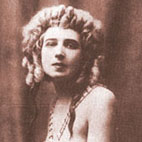
Ida Rubinstein as Salome, 1908


Titian's "Salome With Head of John the Baptist" c 1515

Cunning Time


He's 88 and counting. Debonair ascot at his neck, eyes alert, he rides around in a wheelchair, pushed by someone decades younger than he. Many 88-year-olds suffer similar physical hardship. But this man's constraints have little to do with garden-variety aging: He is chair-bound because he never stopped jumping, falling, darting and turning, even as arthritis consumed his joints.

Until about a decade ago, Merce Cunningham, one of the great modernists of 20th century dance, hobbled around on twisted feet in evening-long performances like a dancing Prospero. He would turn a favorite dancer in a stately promenade, then let his hands elegantly inscribe the air. With his impassive but impish face and halo of curls, Cunningham seemed to keep the otherworldly near to hand, as Shakespeare in his later plays tended to do.

The choreographer began his professional career with Martha Graham in 1939. After six years, he left Graham and story dance behind and almost overnight became the artist to apply the radical innovations of modern music and painting to movement ideas. With groundbreaking composer John Cage at his side, he designed dance sequencing based on chance, using the roll of dice to determine how the dance phrases would line up. He insisted on the independence of music, dance and decor. And he had his dancers move in Olympian fashion, yet never tell a recognizable story. He has never stopped experimenting.


On Jan. 25 and 26 in two separate programs at Stanford University's Memorial Auditorium, the Bay Area gets to sample the wizard's latest invention, "eyeSpace." Bring your iPods to the theater (first go to http://www.merce.org/p/eyespacestanford and download), or, if you don't own one, be issued a player when you walk into the theater with preloaded sound selections (iPods must be returned). As eyeSpace begins, start tuning: You get to make the choices in the sound you hear.

The other option is to remove the earbuds and listen to composer Mikel Rouse's sound score or, perhaps, your neighbor's dreamy humming. The idea, according to Cunningham's executive director Trevor Carlson, is to have a private experience shared by an entire group. Think a New York subway car filled with people plugged into the same array of sounds, chosen at will, randomly.

No one would be surprised if the use of iPods were a gimmick -- a way, perhaps, to get Apple sponsorship, or draw in a crossover audience. What is surprising is that Cunningham almost always comes off as the master of whatever trends he tries, not the marketeers.

In the 1990s, Cunningham began applying computer technology and a program called Dance Forms (previously Life Forms) to expand his dance-making capacities. Some accused him of faddism. To the choreographer, though, technology offered and continues to offer another way to push the boundaries of the physical universe.

Using Dance Forms, he began to design movement of almost humanly impossible shape, projecting onto his dancers the angularity of Egyptian figures or giving them a science-fiction strangeness, like creatures whose legs were arms and arms were legs. Whether or not the results were always successful mattered little to Cunningham. What he has cared about, he says, is not whether the experiment works, but that he learn something new.

Experimentation isn't exclusive to "eyeSpace" in this run. The Jan. 25 concert includes two other seminal works, "Crises" from 1960, and the 1993 "CRWDSPCR." Asked to describe "Crises," John Cage once called it "a dramatic, though not a narrative, dance concerned with decisive moments in the relationship between a man and four women."

It is set to selections from Conlon Nancarrow's "Rhythm Studies for Player Piano," created by the avant-garde composer by punching holes in player piano rolls. "CRWDSPCR," as dance historian Roger Copeland aptly says, is one of the savviest comments on the role of the microchip in our perception of time and space (the title, allowed to breathe, can be read as either Crowd Spacer or Crowds Pacer). On Jan. 26 in addition to "eyeSpace," the evening will include the 1999 work "Biped."

Details: Merce Cunningham Dance Company, Stanford's Memorial Auditorium, Jan. 25 and 26, 8 p.m. $20-46 general, $10-23 Stanford students. 551 Serra Mall, Stanford University. 650-725-ARTS, livelyarts.stanford.edu.

ALSO COMING UP: At the nether end of the contemporary spectrum, anarchist dancemaker Keith Hennessy will reprise his 2007 anti-war spectacle, "Sol niger" (Black sun), which is as messy and eclectic as Cunningham's work is abstract and refined. Running for two weeks at Project Artaud Theater in San Francisco (Jan. 16-19 and 23-26), Hennessy's band of deft performers employs circus techniques, aerial work, expressionist theater and live and prepared music in a potent political cocktail. Referring to a solar eclipse, "Sol niger" takes a hard look at the Iraq war and national and international U.S. policies.
Details: 8 p.m. Jan. 16-19 and Jan. 23-26. 450 Florida St., S.F. Tickets $25 except Wednesdays -- "Pay what you can," cash only at the door. 415-255-2500 or http://www.brownpapertickets.com.

On an altogether different note, the Boston-based Collage Dance Ensemble joins Stanford's Turkish troupe Yore Folk Dance Ensemble on Jan. 19 at Berkeley's Roda Theatre. The two troupes join forces for a lively night of Turkish, Balkan and Eastern European music and dance titled "Anatolian Rhythms." They promise to have you dancing in your seat.
Details: 8 p.m. Jan. 19, 2015 Addison St., Berkeley. $15-$30. 510-647-2949.